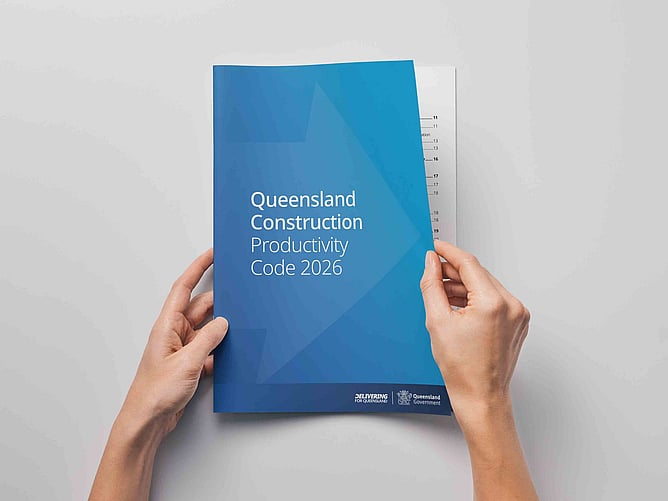
The Queensland Government has a new Construction Productivity Code, and it changes what some companies need to show in a tender. We’re designers, not lawyers, so this isn’t compliance advice. But we spend our days on tender documents, so here’s what stood out to us.
Who the Code applies to
It covers publicly funded construction contracts over $150 million, where the EOI or tender goes out on or after the Code’s start date. It only applies to parties doing on-site work, and it doesn’t touch privately funded projects. Tenders issued before the start date aren’t caught.
So if you’re not chasing work that size, it probably won’t hit your tenders directly. But it can reach you through the company that is.
What tenderers have to show
At EOI or first response stage, you don’t need a full plan. You need a written commitment saying you understand the requirements, you’ll comply, and you’ll prepare a Workplace Relations Management Plan if you’re shortlisted. If there’s no shortlisting, the plan is due before the contract is awarded.
What it means for subcontractors
Principal contractors have to build the Code into their contracts. Subcontractors must give a warranty that they’ll comply, and allow the government to check relevant work and records. The Code also says compliance is an ongoing condition of working on these projects, so it’s not a one-off tick.
Where presentation comes in
None of this changes how good your work is. But your tender response now has more to say, and the person reading it still wants to find the answer fast. A clear commitment page, a current capability statement and consistent supporting documents all help.
That’s the part we do. If you want a hand with your construction capability statement or tender response, have a look at our capability statement design, or book a Free Design Assessment and we’ll look at what you’ve got now.

