When a business owner asks me about a new website, the platform question usually comes up early, and Rocketspark vs WordPress is one I get asked about a lot. Most people have heard of WordPress, and some have been told it's the only "proper" option. So when I say I build on Rocketspark, I often get a curious look.
I didn't land on Rocketspark by default. It was a decision I made after a lot of research, and I want to share how I got there.
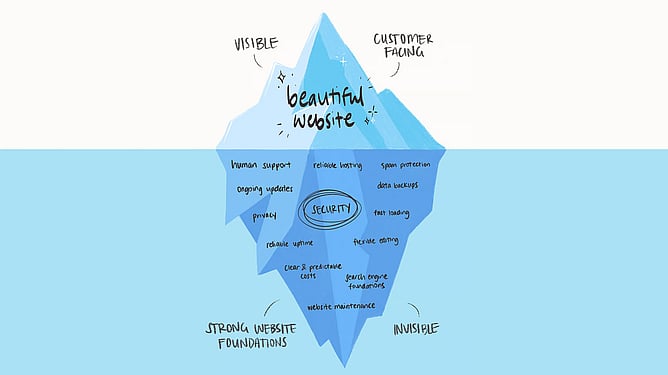
Image credit: Rocketspark
I looked at the popular platforms first
Before I committed to anything, I spent quite a bit of time comparing the big names, including WordPress, Wix, Squarespace, Showit, Weebly and Rocketspark. Honestly, any of them can make a website look good. Design was never the deciding factor.
What I really wanted to know was what happens once the site goes live. Who looks after it? Who do my clients call when something goes wrong? And can they update it themselves without needing me every time?
What sits below the surface
Rocketspark's iceberg illustration at the top of this post explains this really well. The design is the bit everyone sees. Underneath is everything that keeps a website running, like hosting, security, backups, updates, spam protection, forms that actually land in your inbox, and the SEO setup that helps people find you on Google.
With WordPress, a lot of that underwater part ends up being the owner's job. Plugins need regular updates, hosting is usually separate, and when two things clash, something can break without anyone noticing. I've had clients come to me with websites they were too nervous to touch.
Rocketspark vs WordPress: the honest trade-offs
I want to be fair here. A well-built WordPress site that's looked after properly can be fast, secure and rank really well. It's also very flexible, which is why some businesses genuinely need it.
Rocketspark has its downsides too. You can't add every feature you can think of, and because your site lives on their platform, moving it somewhere else later takes more work. For the businesses I work with, those trade-offs are worth it. But it's worth knowing about before you decide.
Support was the deciding factor
When my clients or I need help, Rocketspark usually gets back to us within 24 hours, and we hear from a real person who knows what they're talking about. If something's urgent, there's also a phone number you can call. You don't get sent an FAQ link or a robot reply. When it's your business on the line, that makes a big difference.
Easy to update, for you or your team
Editing a Rocketspark site is simple. You click on the text you want to change and type over it. If you'd rather have someone on your team look after it, we can train them so they can update the website whenever they need to.
What to ask before you choose a platform
Whichever platform you go with, these questions are worth asking your web designer:
Who looks after security and updates once the site is live?
Is hosting included, or is it separate?
Can I update the content myself without breaking anything?
Who do I contact if something goes wrong, and how quickly will they respond?
Is the site set up for SEO from day one?
If your designer can't give you clear answers to these, that tells you something.
Thinking long term
My goal is for my clients to have a website that brings in leads, is set up properly for SEO, and doesn't need constant babysitting. I also want them to know there's reliable support behind them long after we've handed the site over. That's why I chose Rocketspark.
If you're weighing up platforms for your own business, I'm always happy to have a chat about what might suit you. And if WordPress turns out to be the better fit, I can point you to someone I personally trust.

